

Founded in 1979, the National Association for Biomedical Research (NABR) is a 501(c)(6) non-profit association dedicated to sound public policy for the humane use of animals in biomedical research, education, and testing. NABR provides a unified voice for the scientific community on legislative, regulatory and legal matters affecting the responsible, humane, and ethical use of laboratory animals. Members include more than 340 universities, medical and veterinary schools, teaching hospitals, pharmaceutical and biotechnology companies, patient groups, and academic and professional societies who rely on humane and responsible animal research to advance global human and animal health. For more than 40 years, and as the only national, non-profit organization solely dedicated to advocating sound public policy for ethical and essential animal research, NABR has worked to safeguard the future of biomedical research.
NABR Files Formal Petition Challenging the Listing of
Long-Tailed Macaque by the IUCN
Working with recognized, independent scientists, the National Association for Biomedical Research (NABR) filed an initial petition on June 15, 2023 with the International Union for Conservation of Nature (IUCN) challenging the recent designation of the long-tailed macaque (Macaca fascicularis) as endangered under IUCN listing criteria. This designation is a result of improperly used data that do not support the endangered species listing. NABR called for an immediate review. Read more by clicking here.
After several weeks of discussions between NABR and the IUCN, on September 11, 2023, NABR filed a formal petition with the IUCN challenging its decision to uplist the status of the long-tailed macaque from “vulnerable” to “endangered.” Read NABR’s formal IUCN petition and the addendum here. Read NABR’s press release here.
In October 2023, the IUCN formally accepted NABR’s petition. Read the press release here.
On February 1, 2024, NABR submitted an expanded petition to the IUCN concerning the long-tailed macaque status. The expanded petition can be found here and the press release about the expanded petition can be found here.
Read NABR’s February 2024 response to the authors of the study the IUCN relied on to uplist the status of long-tailed macaques to “endangered.”
NABR's IUCN Petition: Noteworthy Articles
Read the August 1, 2023 article in the journal Science by Shanghai correspondent Dennis Normile about NABR’s IUCN petition. Normile also discusses a recent study in Biological Reviews according to which long-tailed macaques are hyperabundant in formerly wild environments where humans have started settling. He highlights the inherent contradiction between the IUCN’s “endangered” listing of long-tailed macaques on the one hand, and the scientific data presented in the Biological Reviewsstudy and NABR’s petition on the other hand.
Read the NABR press release announcing the December 21, 2023 American Journal of Primatology article that disputes information used to determine a faulty conservation status of long-tailed macaques the IUCN issued. You can also read the AJP article directly here.
YOUR HELP NEEDED
The U.S. Fish and Wildlife Service is denying permits related to Cambodian origin nonhuman primates (NHPs) and samples. Roughly 60% of the preclinical animal models of the drug development process are Cambodian origin NHPs. This action has put the development of new drugs to treat thousands of diseases for which there is no treatment or cure at significant risk. Our message is simple: We are calling on the U.S. government to work with, not against, the biomedical research sector, to find solutions to remedy the disruption in the biomedical research supply chain. Thank you for helping us do that.
Institutional Sign-on Letter
NABR is organizing an institutional sign-on letter to be sent to key members of Congress. The sign-on letter is here, and we are asking as many organizations as possible to add their names. Some organizations have asked whether the U.S. Fish and Wildlife Service has issued any public notice regarding the denial of permits affecting Cambodian origin NHPs and samples. Unfortunately, there has been no public statement or public notice regarding this decision, which is one impetus for our correspondence to the government. At least 60% of the NHPs in the drug development pipeline are of Cambodian origin, which underscores the impact this decision has on the creation of new medications for thousands of diseases for which there is no treatment or cure.
If you would like to sign-on, please email [email protected].
Individual Letters
NABR members have submitted more than 2,000 letters to Congress regarding the NHP crisis, so let’s keep the momentum going! Please broadly circulate the link [speak4.app/lp/24d1d8/] and encourage others at your organization to do the same. Alternately, you can click the "Take Action" bubble at the bottom right of your screen. The process is fast and easy, and it does make a difference. NABR is hearing from Capitol Hill staff who have taken an interest in this critical issue.
NHP Shortage News
December 26, 2023 The South Florida Sun Sentinel: https://www.sun-sentinel.com/2023/12/26/international-organizations-monkey-business-will-slow-medical-research-opinion/
September 4, 2023 The Washington Times: www.washingtontimes.com/news/2023/sep/4/activists-are-trying-to-slow-down-lifesaving-medic/
August 4, 2023 BioSpace.com: www.biospace.com/article/scientists-veterinarians-and-conservationists-offer-recommendations-to-address-the-shortage-of-long-tailed-macaques-required-for-continued-health-advancements-/
August 3, 2023 ScienMag.com:www.scienmag.com/scientists-veterinarians-and-conservationists-offer-recommendations-to-address-shortage-of-long-tailed-macaques-required-for-continued-health-advancements/
June 27, 2023 The San Joaquin Valley Sun: www.sjvsun.com/u-s/advocates-peta-pressuring-feds-to-bar-on-primate-use-for-dug-research/
June 15, 2023 The San Joaquin Valley Sun: www.sjvsun.com/business/report-false-designation-for-primate-could-block-ability-to-test-groundbreaking-drugs/
June 15, 2023 E&E News: www.subscriber.politicopro.com/article/eenews/2023/06/15/researchers-challenge-endangered-status-of-lab-primate-00102155
May 22, 2023 The Salina, Kansas Post: www.salinapost.com/posts/a5f331c8-afd1-49e0-b32c-f6e4ad0b2092
May 4, 2023 STAT+: www.statnews.com/pharmalot/2023/05/04/nih-primates-macaques-research-biomedical-animals-organs/
May 4, 2023 NABR press release: https://www.nabr.org/about-nabr/news/nas-report-affirms-necessity-nhp-models-and-highlights-shortage-crisis
May 4, 2023 The Wall Street Journal: The U.S. Is Running Out of Research Monkeys
May 4, 2023 STAT+: NIH systems for non-human primate research fall short, threatening biomedical research
May 4, 2023 AP News Research monkey shortage undermines US readiness, panel says
March 27, 2023 www.openaccessgovernment.org: https://www.openaccessgovernment.org/article/fostering-nonhuman-primate-nhp-brain-research-without-animal-sacrifice/155741/
March 6, 2023 Endpoints News: Pharma industry lobbies Congress for solution to primate shortage after indictments for alleged smuggling
March 3, 2023 ScienceDirect: Is biomedical research demand driving a monkey business?
March 3, 2023 STAT+: As a U.S. agency denies permits to import monkeys for research, industry starts pushing back
March 3, 2023 The Wall Street Journal: Monkey Business Threatens U.S. Drug Discovery
January 20, 2023 The Dispatch: America's Primate Problem
June 23, 2022 Mother Jones: A Plane of Monkeys, a Pandemic, and a Botched Deal: Inside the Science Crisis You’ve Never Heard Of
September 28, 2022 Bloomberg News: Lab Monkeys Are the Latest Covid Shortage
August 31, 2020 The Atlantic: America Is Running Low on a Crucial Resource for COVID-19 Vaccines
FAQs on the FDA Modernization Act
No. The FDA Modernization Act 2.0 does not eliminate animal testing nor does it state or imply that animal testing is unnecessary. It simply clarifies the definition under the Food, Drug and Cosmetic Act of a nonclinical test or study to include adjunct and complementary testing methods like organs-on-a-chip, micro-physiological systems and computer simulations. Animal models continue to be highly relevant to test the safety and efficacy of a drug as part of the approval process. NABR supports the use of alternative models to animal testing when scientifically feasible and when scientifically validated, and remains confident in the ability of FDA scientific reviewers to determine the best data that should be submitted in new drug applications.
The FDA states that many procedures intended to reduce animal tests are still in various stages of development[1,2]. Adjunct and complementary tests have a purpose, but ultimately testing must progress to a whole intact, living system, including a rodent and non-rodent species during preclinical drug trials[3,4,5]. Not conducting animal tests, when necessary, would likely subject humans and other animals to unreasonable risks.
The FDA Modernization Act 2.0, passed as part of the Omnibus appropriations legislation in December of 2022, amends the Federal Food, Drug, and Cosmetic Act (21 U.S.C. 355) to clarify methods manufacturers and sponsors can use to investigate the safety and efficacy of a drug by inserting language on “nonclinical tests,” where “nonclinical tests”are defined broadly as follows[6]:
- · A test or study that is most likely to predict human response based on scientific evidence and occurs before or during the clinical trial phase of the investigation of the safety and effectiveness of a drug. Such test or study may include the following:
- o Cell-based assays
- o Organ chips and microphysiological systems
- o Sophisticated computer modeling
- o Other human biology-based test methods
- o Animal tests
It is important to note that the FDA previously had the authority to allow non-animal data to be considered during safety and efficacy reviews of new drugs and previously issued guidance regarding such. Ultimately, the FDA Modernization Act 2.0 may not materially change the current drug approval process at the FDA. In fact, a spokesperson for the FDA stated on the record that the new law does not change the regulatory process for drugs [7].
The Food, Drug and Cosmetic Act was enacted in 1938 after the drug sulfanilamide, marketed for strep throat in the U.S. without human or animal research data establishing its safety or its efficacy, killed and sickened hundreds of people due to toxic levels of antifreeze it contained[8]. Additional animal research safety and efficacy data became required under the Act in 1963 to prevent incidents like the thalidomide incident in Europe and other parts of the world [9].
Animal testing followed by human clinical trials currently remains the best way to examine complex physiological, neuroanatomical, reproductive, developmental and cognitive effects of drugs to determine if they are safe and effective for market approval.
The overwhelming majority of drugs on the market today relied on safety and efficacy data from multiple animal models before being allowed to move to human clinical trials as demonstrated by the Foundation for Biomedical Research's Top 25 Drugs and Animal Model study[10].
NABR’s press statement on the FDA Modernization Act 2.0
News

NABR Insights
NABR contributes a great deal of time and resources towards developing and compiling industry relevant reports, webinars, and other informative documents for the benefit of its members. Please click the links below to access a variety of valuable resources and information in the Member's Only section.
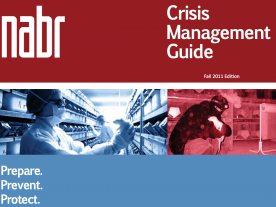




Available for all NABR members.
Why Animal Research?
Animal research is a major contributor to almost all advances in human and animal health. The similarity in biological makeup between humans and some animals provides insight into diseases such as COVID-19, Diabetes, Cancer and many more. Animal testing also allows scientists to control factors such as temperature, lighting and diet, which is rather difficult and sometimes unethical during human trials.
FAQ on Animal Research
Modern medical research, including research using animals, is necessary to understanding disease and creating medicines to improve human and animal lives and reduce suffering. Every known medical breakthrough known has a basis in animal research and all of the top 25 most prescribed drugs were developed with the assistance of animal models. To learn more about the indispensable role of animal research, watch a brief PSA by the Foundation for Biomedical Research (FBR) by clicking here.
Biomedical research is conducted in universities and commercial laboratories across the globe. Important breakthroughs are typically dependent on collaborative efforts from different laboratories in many states and countries.
Successful research depends on a reliable source of healthy laboratory animals. The best way of achieving this is through a global supply and transportation chain. Animals obtained from the same source have consistent genetics allowing scientists to better interpret data from animal studies. Professional breeders with highly controlled environments produce disease free animals with special characteristics important in studying human disease.
A shared source of genetically defined and healthy animals dramatically reduces the total number of animals required for a research program. A striking benefit of collaboration is the refinement of animal use. By including collaborators with the highest expertise and the best modern methodology to conduct animal studies, better data is produced.
Without the ability to transport laboratory animals from licensed commercial breeders and between research facilities, each research site would have to breed its own animals. This would be costly and would unnecessarily increase the number of animals for research.
Experienced and licensed professional transport companies are used to safely move laboratory animals. Animals are transported in vehicles equipped with temperature and humidity monitors and controls. Travel routes are designed to take the shortest time reasonable to reduce travel stress. To keep the journey as brief as possible, animals are frequently transported via airplane.
During transport, animals are provided with food, water and appropriate temperatures and conditions. Shipping containers are designed for proper ventilation and to protection animals from escape or injury. Bedding materials are provided for comfort and are specific to the needs of each species. Veterinarians specializing in the care of laboratory animals coordinate the shipping process, working with trained staff who monitor animals throughout the shipping process.
It is often in the best interests of an animal to be born and raised in areas with a climate well suited to the welfare of their species and where year-round outdoor housing is available. Nonhuman primates most commonly used in research are native to tropical and subtropical regions, and breeding facilities in those regions can provide captive animals with a suitable environment. These captive bred animals are reared to young adulthood before being moved to research facilities around the world.
The preferred source for research animals is a professional breeder. These producers are dedicated to supplying healthy, high quality animals to the research community. Animals are obtained from licensed, inspected and accredited facilities that employ experienced handlers, caretakers, and veterinarians. The research community demands high quality standards for food, water, sanitation and welfare for research animals, creating conditions that often exceed those of typical house pets.
The regulated transportation of laboratory animals is very safe. Industry statistics show there is an error rate of less than 1% for either land or air transportation of animals. Most of these errors do not impact the health or welfare of the shipment, so the actual impact on animal safety is even lower.
Without the ability to transport laboratory animals, research would be restricted to fewer locations and would lose the contributions of many talented scientists. Further, scientists would not always be able to use the most appropriate model to study a disease or response to a medication, delaying or stopping much needed medical advances.
The development of new medicines would slow, or even stop, denying cures and treatments to the people who need them. Research institutions would have to divert precious funding, manpower and laboratory space to breeding animals, taking resources away from important research.
Scientific collaboration across the world would be hampered by inconsistency in their research animals and difficulty interpreting data. Without the ability to transport laboratory animals by air, the research community would be unable to provide the best possible conditions for shipping animals quickly and safely. Without air transportation options, animals would often be subject to longer and more stressful transportation by land or sea.








Congressional and Legislative Action
Learn more about NABR's advocacy efforts, like the passage of the AETA.